How fast does water damage need to be fixed?
Sooner is better. Mold can start in a day or two on damp surfaces. Many providers can respond quickly, but timing varies, so ask about availability when you reach out.
Water Damage Help for San Jose and the South Bay area
Request an estimate today
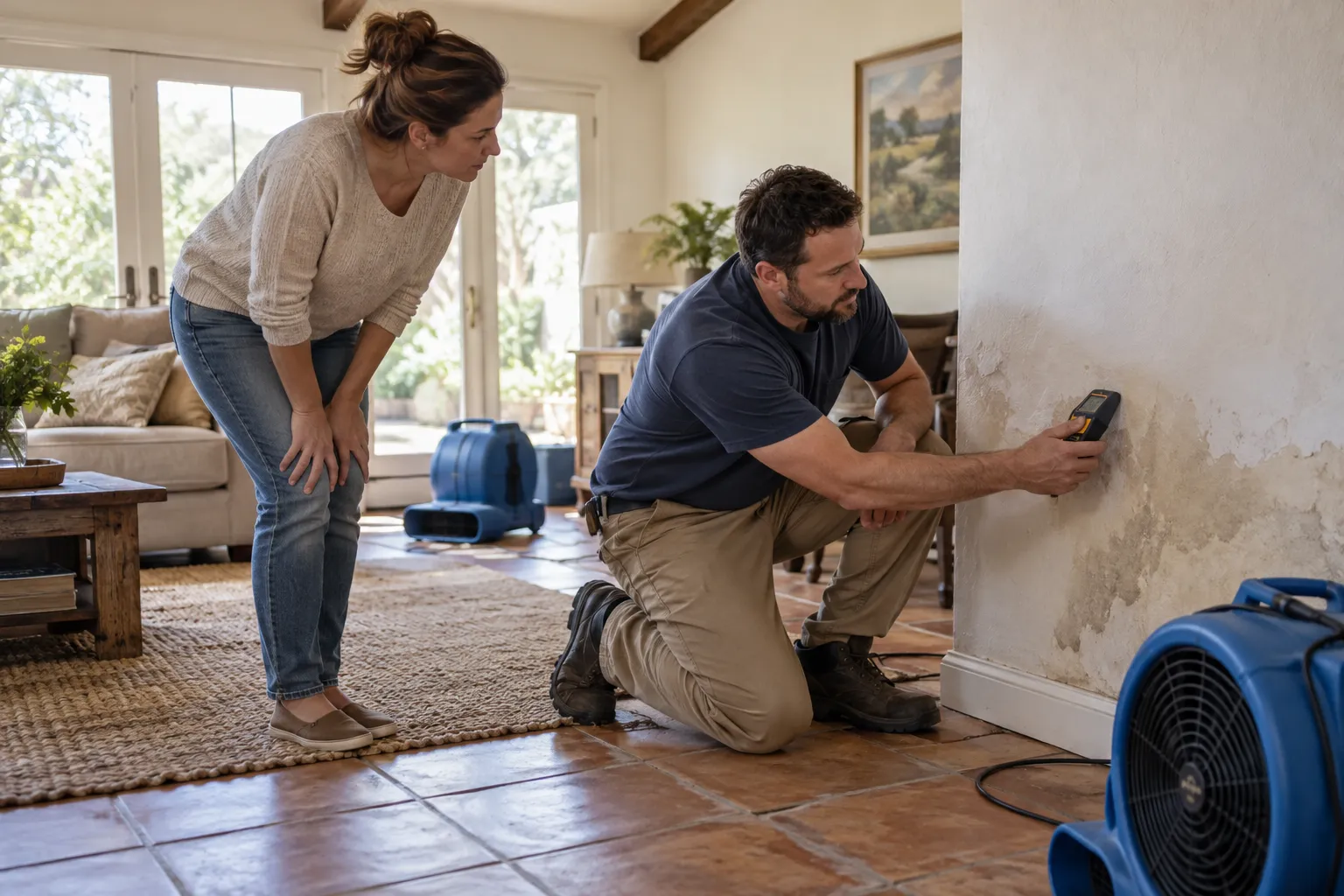
Water damage restoration means getting a wet home dry, clean and safe again. A local provider pulls out the water, dries the walls and floors, and removes what cannot be saved. Then the provider repairs the damage so your rooms work again.
Gatheringfight Restoration is a referral service. We do not do the work. We connect you with independent providers in our network who serve San Jose and the South Bay area. You can ask each provider about timing, noise and access, so the job fits around school, work and sleep. You can also ask what the steps will be, how long the gear will run, and what the written quote covers. Request an estimate and compare your options. There is no obligation, and you choose who to hire.
You found water where it should not be. Take a breath. You have a clear path forward.
The goal is simple: dry, then done. A local provider removes the water, dries the structure, and fixes what the water harmed. Gatheringfight Restoration helps you find that provider. The provider does the work.
You can help in a few ways while you wait for a provider. Keep it safe.
If water is deep, or the smell is strong, leave the work to a pro. Safety comes first.
Request a callback to check provider availability.
Water spreads fast. It soaks into drywall, wood and padding. It moves under floors and up walls.
Mold can start to grow within a day or two on damp surfaces. Wood can swell and warp. Paint can bubble. Smells get harder to remove.
Acting early often keeps the job smaller. Many providers can respond quickly, but timing varies. Ask what is open near you.
The work usually runs in a set order. Each step has a plain name.
A box fan moves air across the top of a wet wall. It does not dry what is inside. Water hides in the studs and under the floor.
Pro gear is stronger and made for this task. Providers also track the numbers each day. They know when a wall is truly dry.
If you skip this, damp can stay behind. That is how mold and odors come back later.
Not all water is the same. Pros sort it into three groups.
The type changes the plan. Gray and black water often mean more removal of soaked items. Ask your provider which type you have.
Many homes here are stucco ranches on slabs or raised foundations. Others are older bungalows and 1950s to 1980s tract homes. Each type gets wet in its own way.
On a slab, a hidden pipe leak can soak the floor from below. On a raised foundation, water can sit in the crawl space. Older homes may have older pipes and older materials.
Winter rain events can push water in through doors, walls and roofs. After long dry spells, a leak can run unseen for weeks. Tell the provider about any odd smells or stains.
You still have school, jobs and sleep. A good provider knows that.
Before work starts, ask a few plain questions:
These answers help you pick a time that fits your week.
Some policies may cover sudden damage, like a burst pipe. Slow leaks and floods are often treated differently. Check your policy or ask your agent.
Providers can often help document damage for a claim. Photos, notes and moisture readings all help. Keep your receipts.
You are the one hiring, so ask questions. A good provider will answer them clearly.
If an answer feels vague, ask again. Compare more than one offer if you can.
Request a callback to check provider availability.
When the readings show dry, repairs begin. That may mean new drywall, paint, floors or trim. Small jobs go quickly. Bigger ones take longer.
Ask for a simple timeline. Ask what you can use in the meantime. Walk the home with the provider at the end and point out anything that looks off.
Then you can unpack, breathe and get back to your routine.
Pumps and strong vacuums pull standing water from floors and carpet so drying can start sooner.
Fans and dehumidifiers dry walls, subfloors and framing until moisture readings look normal.
Providers clean affected surfaces, treat odors and remove items that are too wet to save.
Once things are dry, providers can replace drywall, flooring, paint and trim for you.
Costs depend on how much water, how long it sat, and which rooms were hit. These are typical U.S. ranges only. Prices vary by job and by area, so always ask for a written quote.
| Item | Typical range | Notes |
|---|---|---|
| Inspection and moisture mapping | $150 – $500 | Finds hidden damp spots before work starts |
| Water extraction | $500 – $2,500 | Depends on depth and size of the area |
| Structural drying equipment | $1,000 – $4,000 | Often priced per day and per machine |
| Carpet and pad removal | $500 – $2,000 | Varies by room size and water type |
| Drywall removal and replacement | $500 – $3,000 | Includes patching and paint in many cases |
| Whole-home major loss | $5,000 – $25,000 | Large floods or sewage often cost more |
Share what happened, where the water is, and when it started, using the form or phone.
We connect you with an independent provider in our network who serves your area.
The provider explains the work, the timing and the price. Ask any question you have.
The provider removes water, dries the home and repairs damage on a schedule you set.
We explain each step in short, simple words, so you know what the provider is doing.
Providers in our network serve your area and know the common homes nearby.
You can ask providers to plan visits around school, work and sleep.
Request an estimate and compare. You choose whether to move forward.
Tell us what got wet and what times work for your household. Send the request form and a local provider can reach out to talk through next steps.
Sooner is better. Mold can start in a day or two on damp surfaces. Many providers can respond quickly, but timing varies, so ask about availability when you reach out.
For a very small spill, yes. Mop up, run fans and open windows. For wet walls, floors or a larger leak, a provider has the gear to dry hidden spots.
Some policies may cover sudden damage, like a burst pipe. Slow leaks and floods are often treated differently. Check your policy or ask your agent.
Tell us what got wet and what times work for your household. Send the request form and a local provider can reach out to talk through next steps.
No obligation