Water in your home? Start here
Water on the floor is stressful. You also have work, school and dinner to handle. Gatheringfight Restoration helps you sort it out without losing your whole week.
Gatheringfight Restoration is a referral service. We do not do the repairs. We connect homeowners in San Jose and the South Bay area with independent local providers in our network. The provider does the work. You get a clear next step.
Here is the plan. You tell us what happened. A local provider reaches out. You talk about the job, the timing and the price. Then you say yes or no. There is no obligation.
Many providers can respond quickly, but availability changes by day and by provider. Request a callback to check provider availability near you.
Request Service
Would you rather write it down? Use the request form. Tell us what got wet, when it happened and which hours work for your family. A good provider will plan around school runs and work calls.
If you can do it safely, stop the water at the source first. Then reach out. Wet drywall, floors and insulation get worse as time passes.
How It Works
What Gatheringfight Restoration does
Gatheringfight Restoration is a referral service. You tell us about your water problem. We match you with an independent provider in our network. That is all we do. We do not send crews, and we do not do the work.
What the provider does
The provider visits your home and looks at the damage. Then it makes a plan. Emergency water damage repair often starts with these steps:
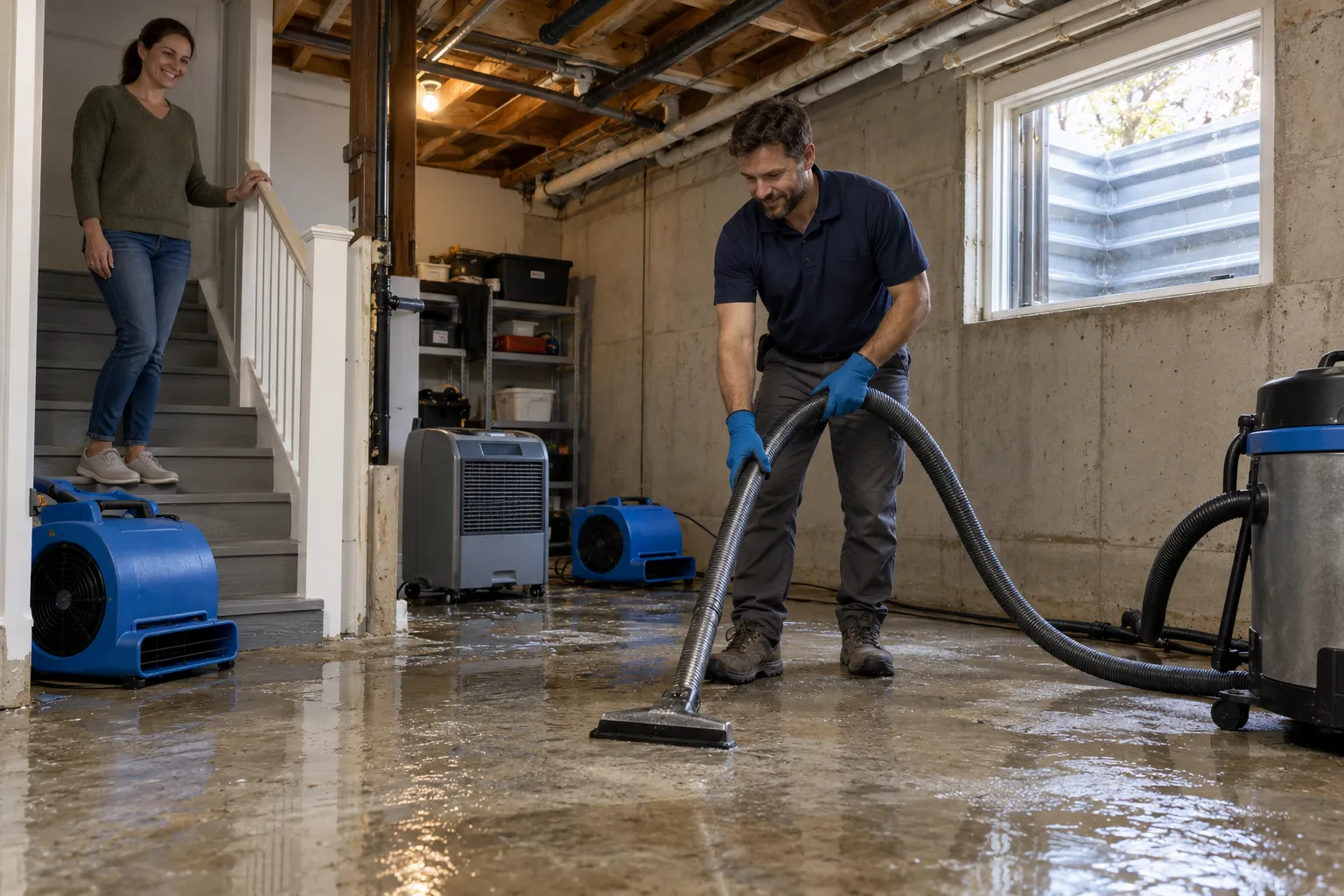
- Water extraction. Pumps and vacuums pull standing water out of the home.
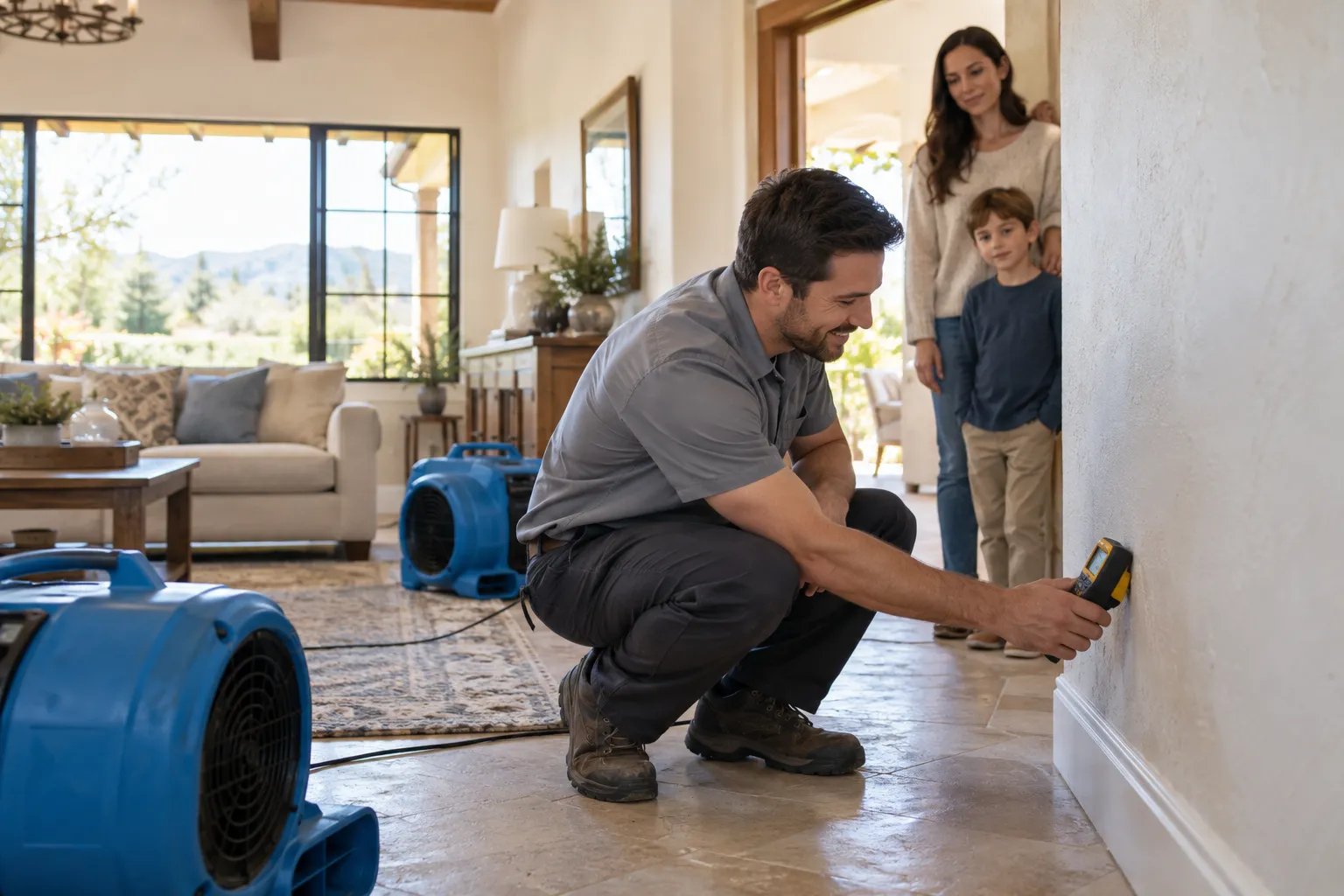
- Structural drying. Fans and dehumidifiers dry walls, floors and framing. "Structural" just means the parts that hold up your house.
- Cleanup. Soaked materials and ruined items come out.
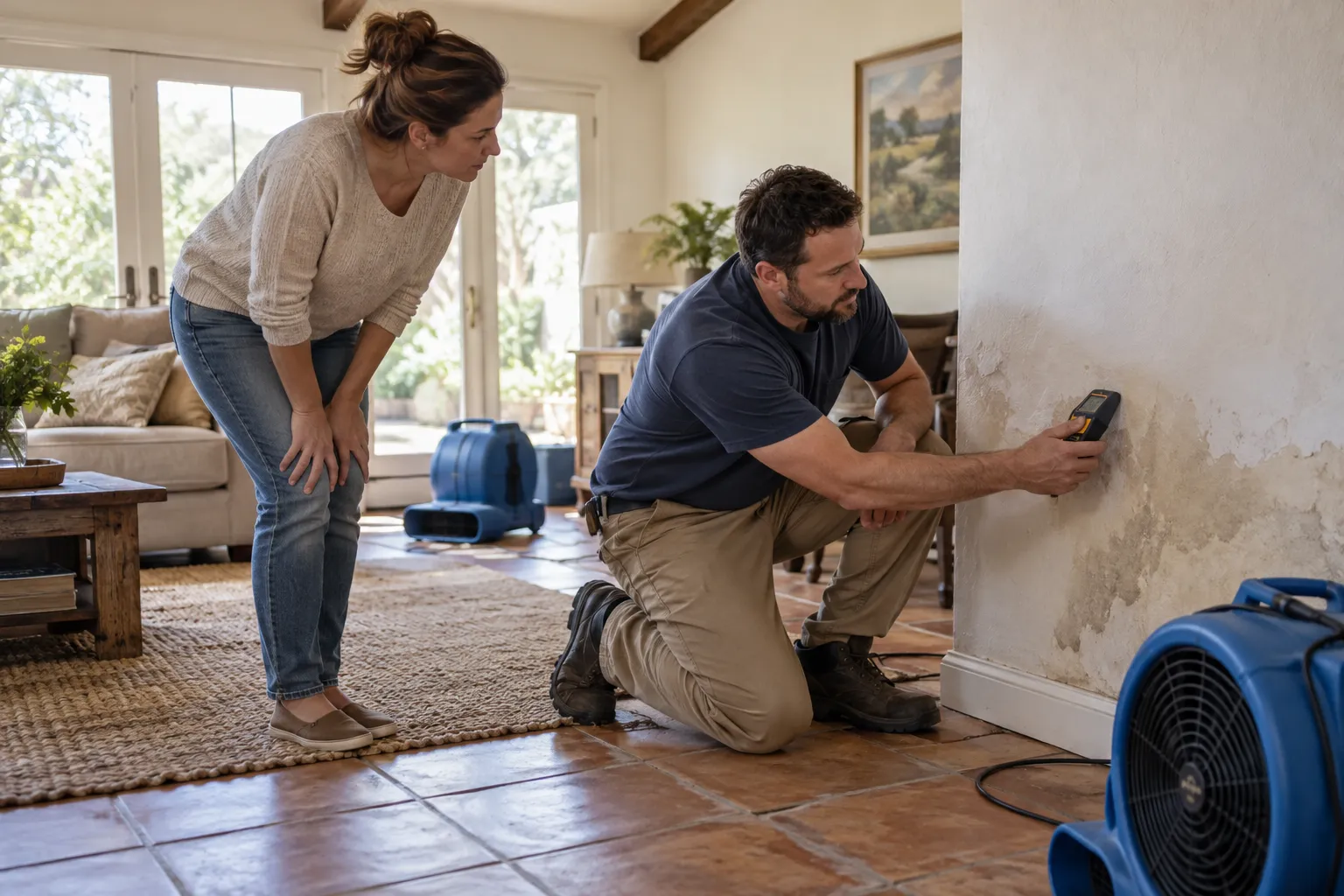
- Moisture checks. Meters show if hidden spots are still wet.
Built for busy households
You should not have to sit home all week. Tell the provider your schedule. Ask about visit windows. Ask about quiet hours for kids or night-shift workers. Ask where the drying gear will sit and how many days the drying may take. A good provider explains this up front.
Why a referral helps
Calling around takes time you do not have. One request puts you in touch with a local provider. You ask questions, compare and decide. You pay the provider, not Gatheringfight Restoration. Always ask for a written quote before work starts.
Serving San Jose and Nearby
Gatheringfight Restoration works with independent providers across San Jose and the South Bay area. Some serve the whole region. Others stick to a few neighborhoods. That is why you tell us where you live and we look for a match close to you.
A nearby provider can often reach you faster and knows the local homes. Many houses here are stucco ranch homes on slabs or raised foundations. Others are older bungalows or tract homes built from the 1950s to the 1980s. Each style hides water in different places.
When you reach out, we ask a few simple things:
- Your street or neighborhood
- What kind of water it is, such as a leak, a storm or a burst pipe
- Which rooms are wet
- What times work for visits
That is enough to start. A provider will ask the rest.
Request Service
Provider coverage and availability vary. If no one in your exact spot can help, we will say so plainly.
What Local Homes Face With Water
Dry seasons, then heavy rain
Long dry spells are hard on roofs, gutters and soil. Then winter rain arrives in strong bursts. Old flashing, cracked sealant and clogged gutters let water in. Check your attic and ceilings after the first big storm.
After smoke season
Wildfire smoke seasons leave ash on roofs and in gutters. The first rain pushes that ash into drains and can block them. Clear the gutters before the rain, and watch for stains on ceilings afterward.
Slab and raised-foundation homes
A slab is a concrete floor poured on the ground. Pipes sometimes run under it. A slow leak there can warm a floor spot or raise your water bill. Raised foundations have a crawl space below. Water pools there where you cannot see it.
Older bungalows and tract homes
Homes from the 1950s to the 1980s may have aging supply lines, old water heaters and worn shutoff valves. These parts fail with little warning. Know where your main shutoff is. Test it once a year.
Basements and low rooms
Basements are less common in mild coastal areas, but some homes have them. Low garages, cellars and sunken rooms flood too. Flooded basement cleanup means pumping out water, removing wet items and drying the space for days.
What you can safely do yourself
You can shut off the water, turn off power to wet areas only if it is safe, move small items and mop up a small puddle. Open windows if the air is dry. Take photos before you move things. Stay out of standing water near outlets.
When to bring in a pro
Call a provider for water that spreads, soaks walls, flows from a sewer line or sits more than a day. Pros have strong pumps, moisture meters and industrial dryers. Those tools reach water you cannot see.
Mold, insurance and cost
Mold can start within a couple of days in damp spots. Some policies may cover sudden damage, so check your policy. Providers can often help document damage for a claim. Typical U.S. jobs range from a few hundred dollars for a small leak to several thousand for a large one. Costs vary by job, so get a written quote.
Ready When You Are
Tell us what happened and what times work for your household. A local provider can then reach out and talk through the next step. There is no obligation to hire anyone.
Request a callback to check provider availability, or send the request form if that fits your day better.
Request Service
The provider sets the schedule and the price. Ask questions before you agree to anything.